Coastal Homes and Salt Spray: A Window Maintenance Plan for Seaside Properties
A practical coastal window maintenance plan: how to remove salt residue safely, protect frames and seals,...


Window screens are the hardest-working, least-cleaned surface in most homes. They sit in the dust stream all summer, catching pollen, lint, insect legs and the fine grey film that lifts off nearby roads, and then hold onto it until someone drags a finger across the mesh and discovers how bad it is. The trouble is that cleaning them badly is worse than leaving them alone for another month. A wet cloth pushes mud into the frame, a hose sprayed indoors soaks the sill, and a screen carried through the living room leaves a trail of dirty drips across the floor. The fix is not a special product. It is an order of operations.
Everything below follows one principle: dirt should leave the screen on the outdoor side of the glass. That sounds obvious, and it is the step most people skip.
A screen holds two kinds of mess, and they behave differently. Loose dry dust floats. Wet grime drips. Dry dust has to come off while the screen is still dry, because the second you wet it you turn powder into mud that has to be scrubbed and rinsed. Wet grime has to be dealt with at the window itself, not at the kitchen sink, unless you genuinely want to walk a dripping rectangle through the hall.
So the sequence is always the same: dust first, wash second, dry third, and keep the window closed behind the screen until you are finished. If a screen has to come out, it goes straight through the window it belongs to. That one habit removes most of the mess people blame on window cleaning.
Nothing here is specialist equipment, and you probably own most of it. Gather everything first so you are not walking through the house with wet hands.
Run the vacuum brush over both faces of the screen, top to bottom, in overlapping horizontal bands. Work slowly and let the brush do the lifting rather than pressing the mesh against the frame, which is how screens get stretched and baggy. On the outside face, a light pass is usually enough; the indoor face collects more lint and pet hair and may need two.
Then take the dry paintbrush to the frame, the corners and the track at the bottom of the window. This is where the grit lives, and if you skip it, your first wipe with a wet cloth will drag that grit into the corners as a grey paste. Finish by vacuuming the sill. Only now is it safe to introduce water.
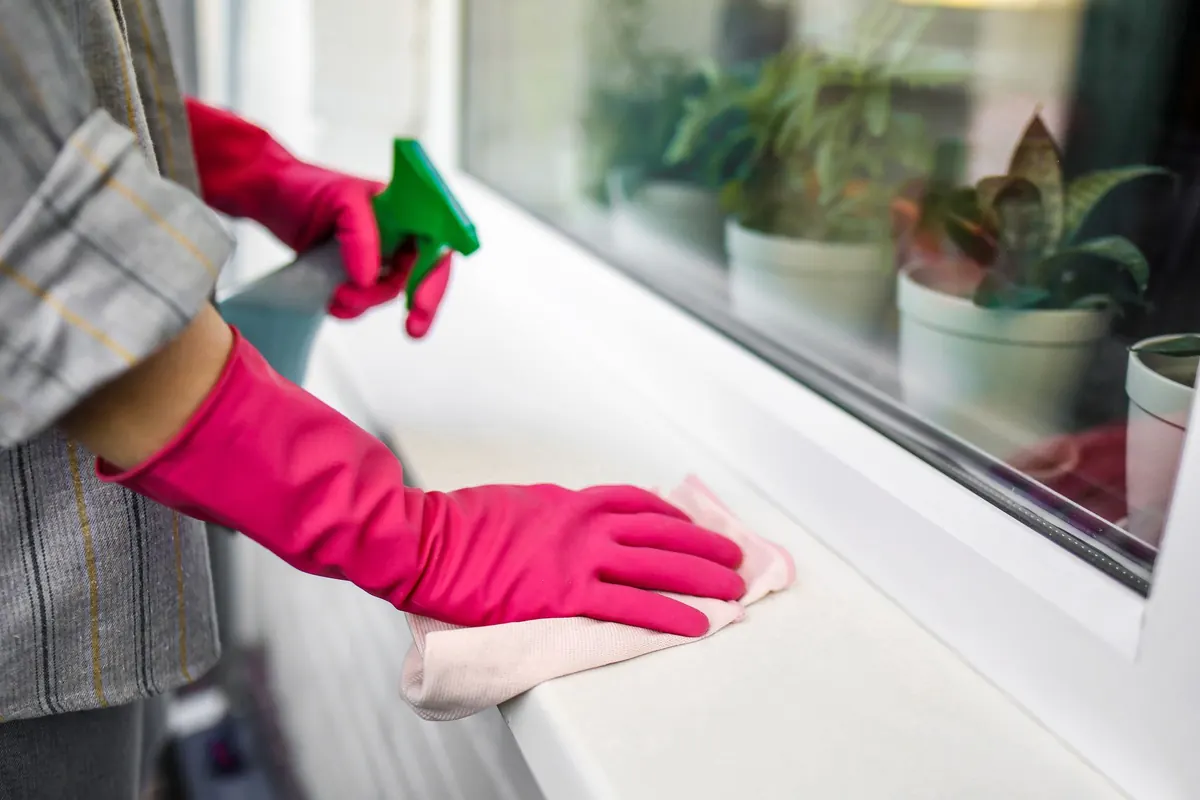
Fold a towel and tuck it along the sill, pressed against the frame, so anything that runs goes into cotton rather than down the wall.
Dip the washing cloth in the soapy bucket, wring it until it is barely damp, and wipe in straight lines with the mesh rather than across it. Rinse with the second cloth, wrung out of the clean bucket, and repeat on the outdoor face if you can reach it safely from inside. Never pour or spray water directly onto a screen that is still fitted. If the window opens outward or the screen is fixed, clean it from outside when the weather allows rather than fighting it from the room.
Pop the screen out and pass it straight through the open window. Wash it flat on the ground outside, soapy cloth first, then rinse with a gentle hose or a bucket of clean water poured from the top. Avoid pressure washers: they tear mesh and bend frames. If you must wash indoors, do it in a bathtub or on a sheet of plastic on the floor, never over carpet.
Dry the mesh with a clean towel, then leave it to air for a few minutes before refitting. A screen put back damp will grow a faint musty smell and can leave water marks on the frame. Wipe the track dry as well, and check the spline — the rubber cord holding the mesh in place — for shrinkage or cracks while you have the screen in your hands. A screen that rattles or sits loose lets in the very insects you are trying to keep out.
These screens collect lint from bedding and clothing, plus pollen if the windows stay open. Vacuum both faces properly, and give the bottom track extra attention; it often holds a surprising amount of fibre.
Cooking grease puts a tacky film on the mesh that dust sticks to. Wash these screens last, after cooking is finished for the day, and use slightly warmer water with a drop more dish soap. Rinse thoroughly, because soap residue attracts dust.
Humidity is the enemy here rather than dirt. Dry these screens completely before refitting and check the frame for dark spotting along the edges, which usually means the screen has been sitting damp.
Road dust and exhaust film build up faster and are finer, so dust with the vacuum first and change the water between screens rather than washing everything in the same grey bucket.
Fiberglass mesh is the most common and the most forgiving, but it dislikes stiff brushes and bleach. Aluminium mesh can take a little more pressure; dry it promptly to avoid water marks. Pet-resistant screens are thicker and need slower vacuuming so the mesh does not distort. Solar and privacy screens are finer and more easily damaged, so vacuum them and spot-clean rather than scrubbing. Retractable and roller screens should rarely be washed wet — vacuum them in place and let them retract dry.
Once a month, run the vacuum brush over every screen in the house while you are already cleaning the glass. It takes less time than finding the bucket. In pollen season, do it every fortnight. That light routine means the deep clean happens once a season instead of every warm weekend, and the floor stays clean in between.
One last note: if you are dusting dry screens and you have hay fever or sensitive lungs, wear a simple mask and keep the window closed until the dust settles. And if a window is high, stiff or awkward to reach, work from the floor with a step stool you trust rather than leaning out — a dirty screen is a small problem next to a fall.
Photo: Negative Space / Pexels
A practical coastal window maintenance plan: how to remove salt residue safely, protect frames and seals,...
A seasonal guide to window cleaning: how pollen and sap reshape spring routines, why autumn rain and...
Eight habits cause most streaky, hazy windows — cleaning in full sun, soaking frames, and using tired...