Coastal Homes and Salt Spray: A Window Maintenance Plan for Seaside Properties
A practical coastal window maintenance plan: how to remove salt residue safely, protect frames and seals,...

Ask two window cleaners how to get glass truly clean and you will get two confident, opposite answers. One reaches for a brass squeegee and a bucket of soapy water. The other pulls out a stack of microfiber cloths and never touches a blade. Both walk away with windows you can read a newspaper through. The real difference isn't which tool is better in some absolute sense — it's what each one demands from you, and which kinds of windows you happen to be facing.
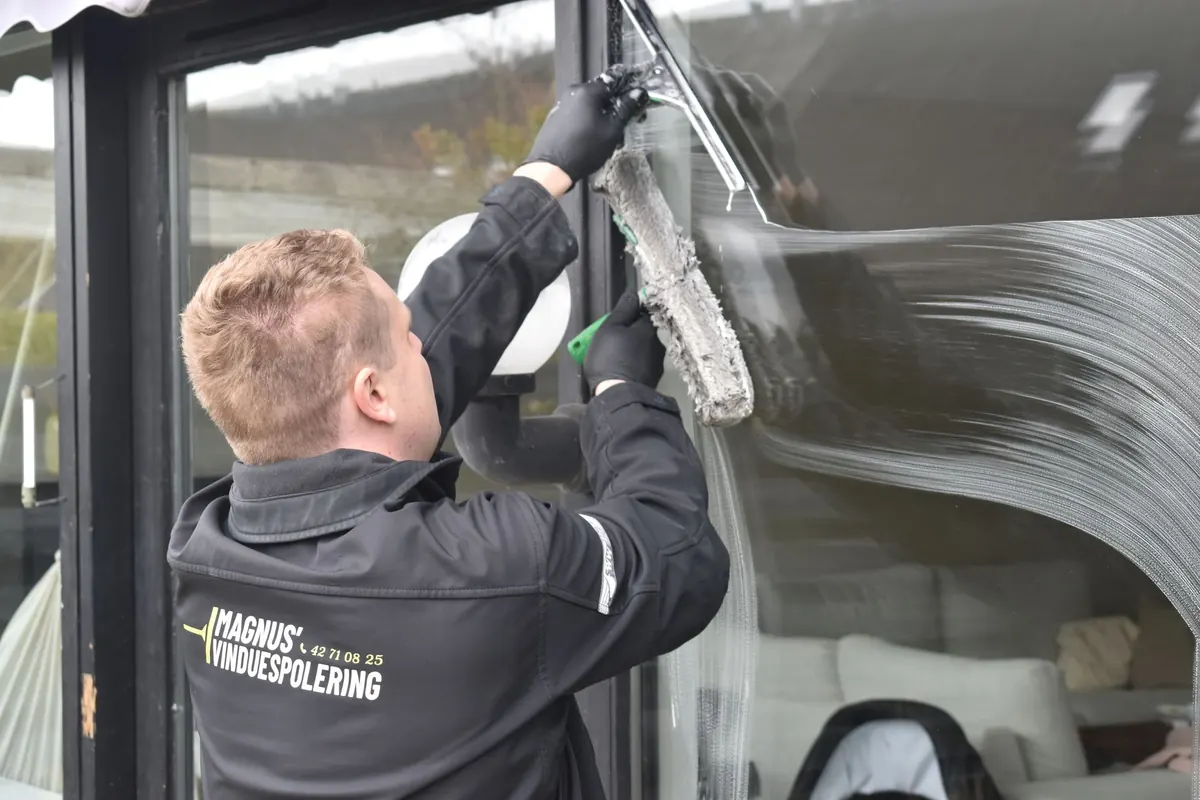
A squeegee doesn't clean glass. It removes water, and it removes it in one continuous sheet. Since the minerals in tap water are what leave marks when a droplet dries, taking the water off in a single pass takes the minerals with it. The blade has to be sharp, the angle consistent, and the rubber clean. Get those three right and the pane dries with nothing left behind.
Microfiber works on a different principle. The fibres are split so finely that they lift dirt and hold it inside the cloth instead of pushing it around the surface. A good cloth traps moisture as well as grit, which is why one pass with a dry microfiber can polish away the thin film a squeegee would have left at the edges.
That film is the whole story. A squeegee leaves nothing on the glass. A cloth leaves a very thin layer of water that has to evaporate evenly. Do that with clean water and a clean, dry cloth and the glass is spotless. Do it with a damp, grubby cloth or hard tap water and you get the smeary haze everyone complains about.
On a big pane, nothing is faster. One wetting pass, six or seven strokes, done. Here is the technique that separates a clean finish from a streaky one:
Work out of direct sun if you can. Solution that dries before the blade reaches it will leave marks, which is why a west-facing window at four in the afternoon is a frustrating place to practise.
Large panes, exterior glass, whole-house jobs, and any window that has just been rained on and needs a fast reset. It also means far less laundry: one blade and a couple of cloths instead of a dozen towels.
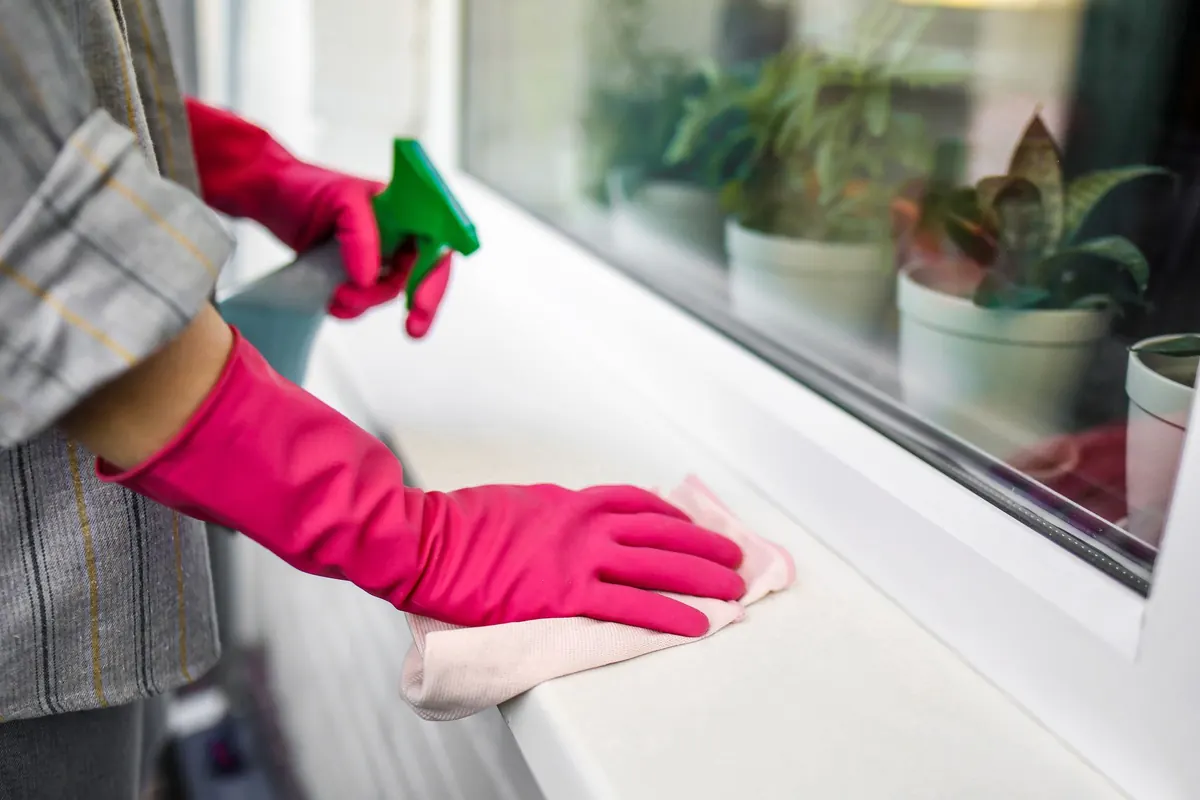
Microfiber asks less of you. It forgives an uneven hand, works in tight corners, and handles the awkward shapes a blade simply cannot follow. The two-cloth method is the version worth learning:
Cloth quality matters more than people expect. Look for a weight around 300 to 400 GSM with a flat, lint-free weave; cheap utility cloths shed fibres and leave a fuzzy haze on dark glass. Wash them separately from towels, skip fabric softener entirely (it coats the fibres and kills absorbency), and retire any cloth that has picked up grit, because trapped particles will scratch.
Interior glass, mirrors, small or divided panes, leaded windows, textured and coated glass, screens, frames and sills. Add cold days, upstairs windows you can only reach at an odd angle, and anything with a shutter or grille in the way.
A squeegee on a twelve-pane sash window is a waste of patience — you spend more time repositioning than cleaning. It also struggles on textured glass, in direct sun, and in the hands of anyone who hasn't practised the overlap. Skip the blade entirely on frosted or filmed surfaces you're unsure about; test a small corner first.
Microfiber, meanwhile, is slow on large glass and unforgiving of a dirty cloth. Load it with grit and it grinds it across the pane. Use it damp for the final pass and it leaves a haze. And it generates laundry, which is a real cost on a big job.
The honest answer to the squeegee-versus-microfiber question is that good work usually uses both. Wash the glass with soapy water and a cloth or strip washer. Pull the bulk of the water off with a squeegee, working top to bottom. Then buff the edges, the corners and any stubborn film with a dry microfiber. The blade does the volume, the cloth does the detail, and neither has to be perfect.
If you only remember one thing: the tool is rarely the reason for streaks. Dirty water, a dirty blade, a saturated cloth or direct sun are almost always the culprits.
One safety note worth stating plainly: if a window needs a ladder, work at ground level or from a stable platform, and leave anything above your comfortable reach to someone set up for it. Clean glass is not worth a fall.
Pick a single interior window this weekend and try the two-cloth method. If it comes up clear, you have the technique and no further shopping is needed. Then try the same window with a squeegee and a rag to wipe the blade, and compare the time it took. Most people find the blade wins outside and the cloth wins inside, which is exactly how the professionals split the job. Buy one decent squeegee, five or six quality microfiber cloths, and a spray bottle — that kit will handle every window in a normal house, and you will stop blaming the tools for the streaks.
Photo: Mikkel Jul / Pexels
A practical coastal window maintenance plan: how to remove salt residue safely, protect frames and seals,...
A room-by-room method for dusting, washing and drying window screens while keeping the mess outside, and...
A seasonal guide to window cleaning: how pollen and sap reshape spring routines, why autumn rain and...